
Texas County Civil Docket Searches
The Texas County Circuit Clerk points public users toward Missouri Case.net. Pick the 25th Judicial Circuit there. Your docket search then stays on Texas County cases. The local circuit view updates in real time once the clerk enters a record. The statewide version spans participating courts. It can find a case filed elsewhere. The county cautions it may run as much as three hours behind, so check timing before relying on it.
Case.net lets you search by litigant name, filing date, case number, or scheduled hearing. A name search is only an index route, not a full party list. A civil party might be an individual, organization, trustee, personal representative, or protected person. Before trusting a result, check the case style. Then match the court, date, and category against what you already know.
- Open Case.net and choose the 25th Judicial Circuit.
- Search by the exact case number when available, or use the party name and a narrow date range.
- Open the case number that matches the local court and civil category.
- Read the Case Header, then Docket Entries, to separate the case identity from its event history.
- Ask the Circuit Clerk about a public copy, a certified order, an older paper file, or a current setting.
Texas County Civil Case Codes
Missouri numbering rules put CV at the front of the main civil category. Case numbers can also carry a suffix showing the type of civil matter. Watch for DR for domestic relations and SC for small claims. AC marks associate-circuit matters, and CC marks circuit civil. P marks probate. Preserve the exact Case.net number.
Treat the codes as routing clues, never as a stand-in for the case file. Probate work belongs to court records but is not an ordinary lawsuit. A transfer, consolidation, or appeal can add a second case number. Keep every identifier with its court and filing date. Later searches then do not blur similar cases.
Use the category with the number: A civil-looking name search can reach very different case types, so the suffix and division are useful checks before reading docket events.
Civil Dockets: What They Show
A civil docket is the file's chronological register. Missouri Court Operating Rule 4 defines the official record as the filed documents plus the docket or backer sheet. A typical Case.net result shows a Case Header, party and case information, Docket Entries, scheduled hearings or trials, judgment or financial information, and public document links. The header locates the case. The entry list traces the procedural sequence.
| Case identity | Case number, Texas County court or division, category, filing date, and public case style. |
|---|---|
| Party roles | Plaintiff or petitioner, defendant or respondent, and public attorney information when displayed. |
| Filing event | Petition, answer, counterclaim, motion, return, or other dated item on the docket. |
| Setting | Hearing date, time, division, judge, courtroom, and event type when the interface displays them. |
| Result | Order, dismissal, judgment, satisfaction, appeal, transfer, or current status, read with the actual order. |
An entry without a link does not prove a filing is missing. It may mean no electronic attachment exists, the document was not published, or access is restricted. And a browser view is no substitute for a certified court copy.
Texas County Civil Docket and File
The index, the docket, and the case file each answer a different question. A searchable index identifies a case. The docket lays out its filings, settings, and orders in order. The file itself holds the petition, response, exhibits, judgment, and more. Case.net can carry you through each layer. The display may stop at the docket line when no public attachment exists.
Write down the Case Header fields first. For any Texas County civil matter, note the case number, style, division, category, filing date, and exact entry date before requesting a document. That detail lets the Circuit Clerk work fast. The clerk can pull a public order quickly. A short online entry then will not stand in for the whole court record.
Texas County Civil Claim Routes
Civil matters in Texas County land in several divisions. These include Circuit, Associate, Probate, and related divisions of the 25th Judicial Circuit. Missouri law caps small-claims civil jurisdiction at $5,000 or less, excluding interest and costs. The associate-circuit civil provision covers specified money actions up to $25,000, also excluding interest and costs. Beyond the dollar figures, other factors still decide the right court. Case type, relief sought, venue, and local assignment all matter.
| Route | Texas County civil docket clue | Research use |
|---|---|---|
| Small claims | SC suffix may appear | Use the court category and case number before requesting a copy. |
| Associate civil | AC suffix may appear | Check the Associate Division route through Case.net and the Circuit Clerk. |
| Circuit civil | CC suffix may appear | Read the court division, petition, and later order separately. |
| Probate or domestic relations | P or DR clue may appear | Expect category-specific access limits and do not call every file a lawsuit. |
The official small-claims statute is the source for the stated small-claims threshold.
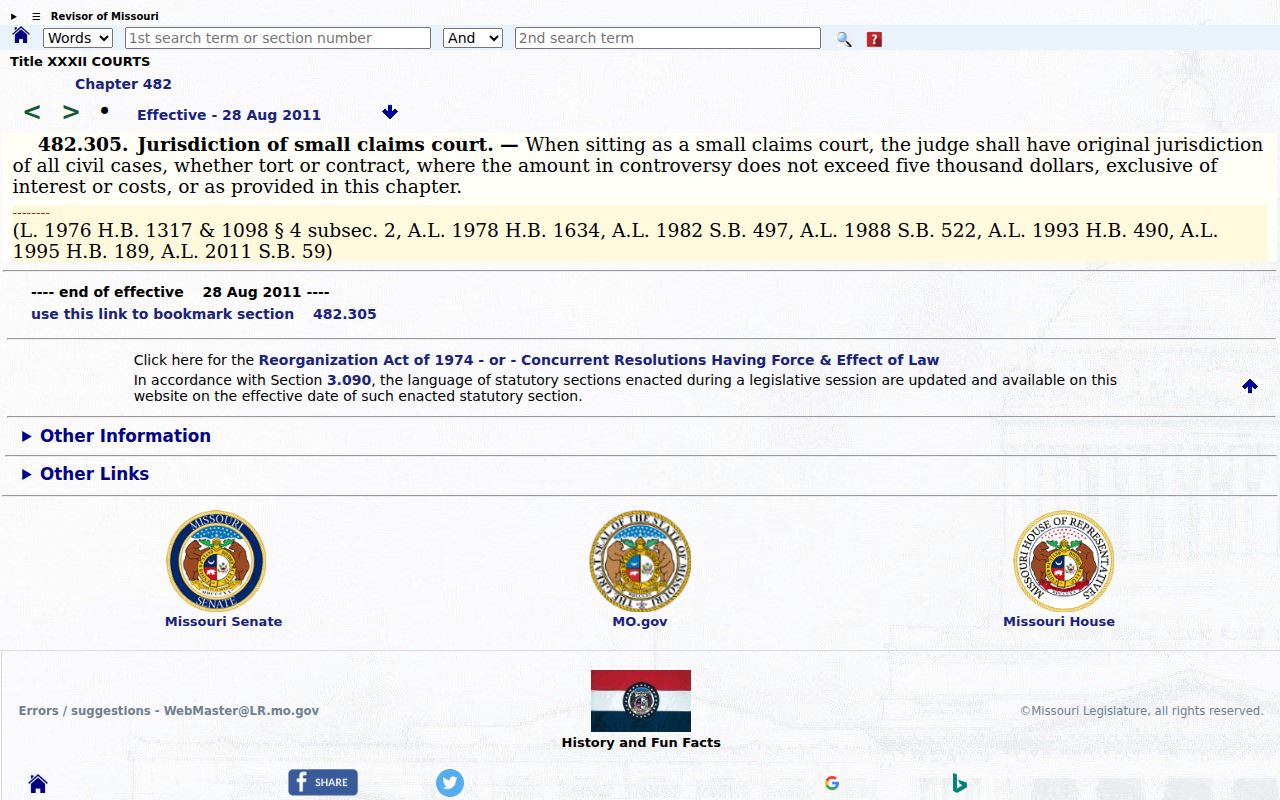
Remember, that statutory limit is a jurisdiction rule, not a promise about a current Texas County filing fee or court assignment. The official associate-circuit provision spells out the separate money-action threshold.
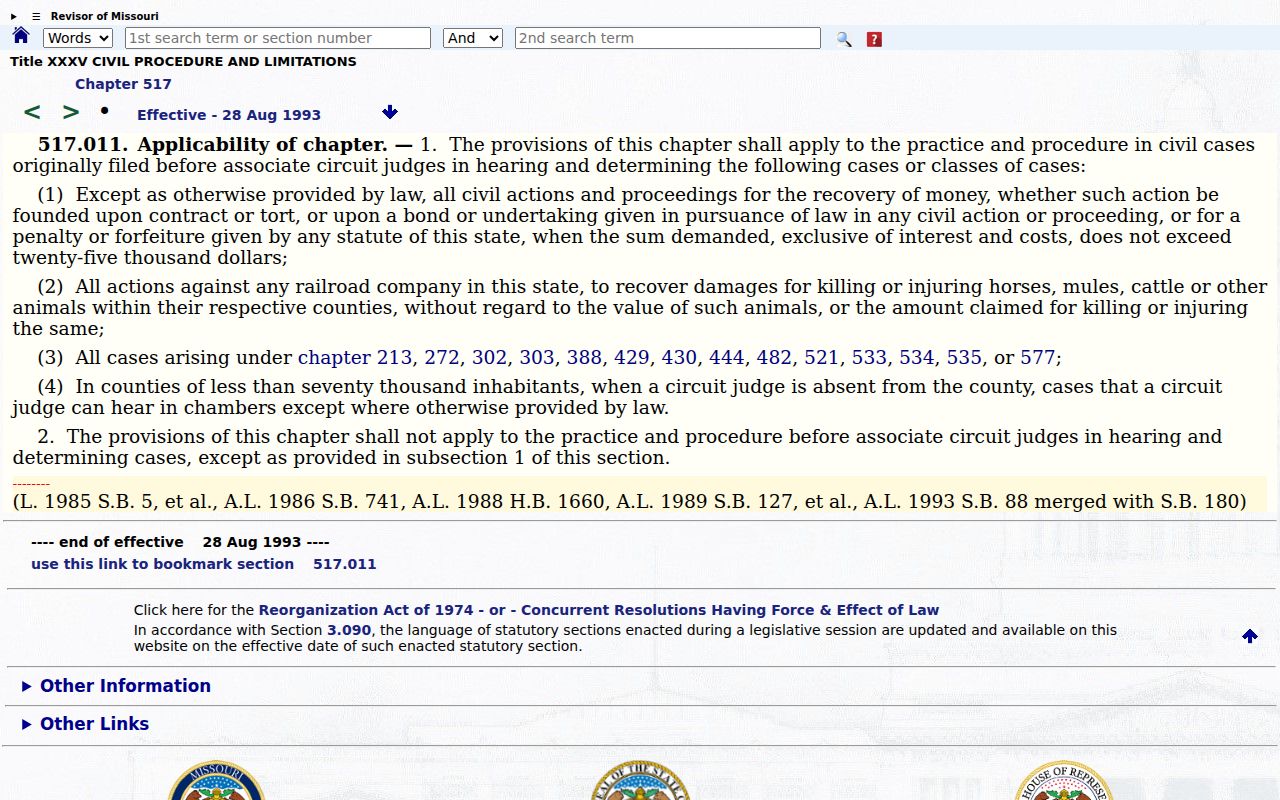
When a civil claim's precise route is unclear, rely on the live case category and clerk guidance.
What Cases Fill the Civil Docket
A Texas County civil docket can follow a case from petition through service, answer, temporary relief, discovery, motion practice, settlement, trial, judgment, and post-judgment activity. Contract, property, money, small-claims, family-related, probate, guardianship, and conservatorship matters each read differently. A petition starts a claim. An answer responds to it. A motion asks the court to act. An order records what the court did.
For a judgment, note the date and stated relief apart from costs, interest, collection activity, or satisfaction. A satisfaction entry will not explain payment details. Default, consent, and trial judgments also travel different procedural paths. The signed order and the full public file, where available, say far more than a short docket label.
Hearings on the Civil Docket
A setting is a court date, not a result. Case.net's Scheduled Hearings & Trials Search can show an upcoming civil hearing, and Docket Entries may list a notice of setting, a continuance, or the outcome once the hearing passes. Jot down the date, time, division, judge, case number, and event type. Several dates can appear. When that happens, the Circuit Clerk should confirm which entry is the latest valid setting.
Texas County posts no standalone daily civil docket PDF. Nor is there a coordinator line or local remote-hearing directory. Each division sets its own calendar. The clerk can route a status request but cannot give legal advice on a civil case.
A continuance only moves a future hearing date. It does not dismiss the Texas County civil case or resolve a motion by itself.
Texas County Civil Filing Meanings
A public docket can make a civil file look tidier than it really is. "Petition filed" is an allegation; "answer filed" a response. A motion is just a request. An "order entered" line is the ruling. The case style never carries the full factual story, so open the document link only when it is public, and copy the court's exact wording when you record an outcome.
Dismissals come in several flavors. A dismissal may be with prejudice, without prejudice, by stipulation, for failure to prosecute, or for some other reason. Judgments vary too. A judgment can be agreed, entered by default, entered after trial, or entered on a motion. A later appeal, transfer, execution, garnishment, or satisfaction entry changes the history without creating a new underlying claim. For public-file access and certified copies, the Texas County Circuit Clerk is the office to contact.
Who Can See Civil Dockets
Access to civil dockets is broad but not total. Public files show parties, filings, hearings, and orders. Case.net is an index and docket view, not a promise that every pleading or exhibit will download. Juvenile, sealed, expunged, mental-health, protected-victim, and confidential material may be limited. Public filings still must shield certain personal identifiers.
Redaction has a statutory basis: the official RSMo §509.520 text sets out the confidential personal information that belongs out of court filings.
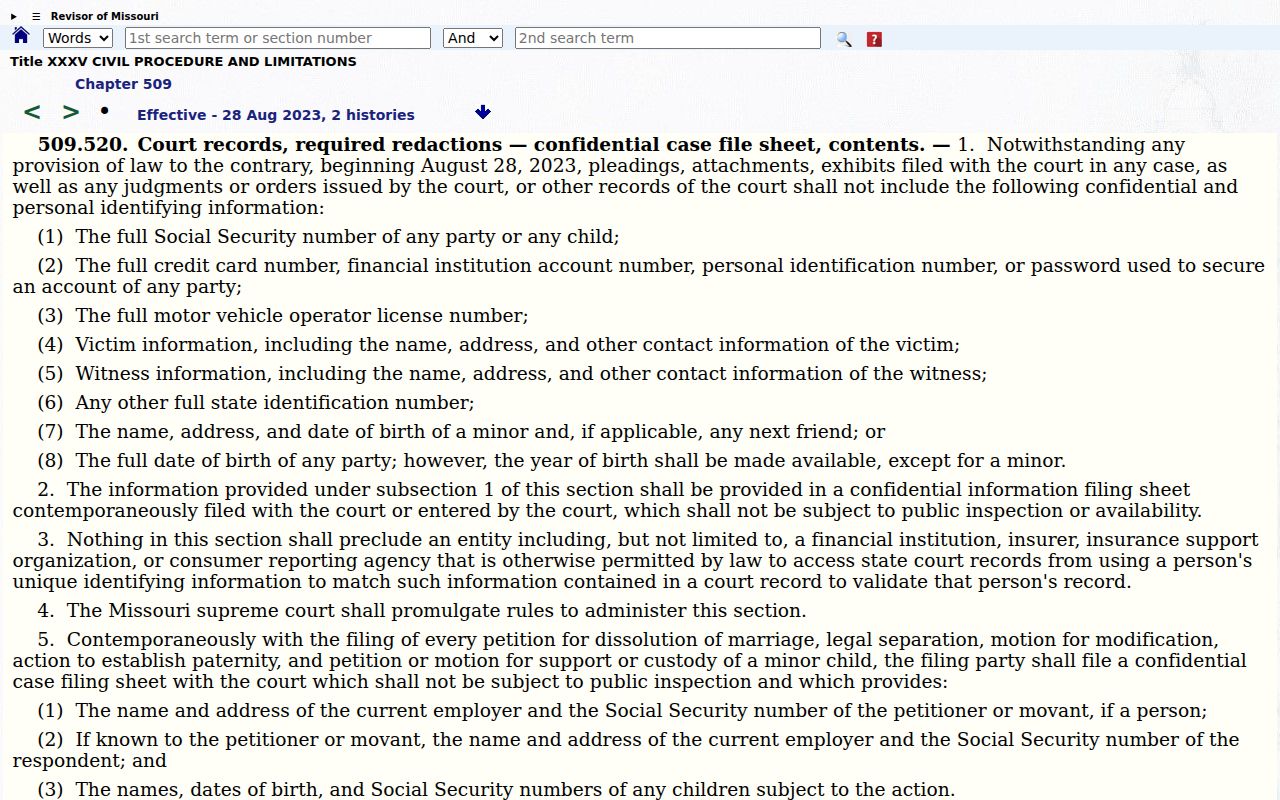
Redaction is why a public civil docket or document can carry fewer details than the version a party originally filed.
Access boundary: RSMo §610.120 limits records required to be closed, while Court Operating Rule 4 preserves confidential-record controls in the statewide court record system.
Texas County Civil Copy Requests
Case.net may name the case but not the document. Then send a focused request to the Circuit Clerk. List the 25th Judicial Circuit, Texas County, the exact case number, the document title or docket date, the format you want, and whether you need certification. No local civil-copy form or fee menu exists. Ask the clerk for a current quote before sending any payment.
You have several public options. They include the Case.net docket and a courthouse public-access terminal, where local availability permits. You can also visit the Justice Center in person. Written requests go to the Clerk's Suite 202 office at 519 N. Grand Avenue, Houston, MO 65483. By phone, call (417) 967-3742. Older records may need a paper, microfilm, or archived search, so ask for one. If you use the Sunshine Law route, RSMo §610.023 supplies the statewide response framework, subject to court-record confidentiality rules.