
Texas County Criminal Docket Searches
For a docket search, the Texas County Circuit Clerk sends the public straight to Missouri Case.net. No county-run database replaces it. Pick the 25th Judicial Circuit to pull a current Texas County criminal docket. According to the county, that view updates in real time once staff make their entries. Searching all participating courts helps when a case might sit elsewhere in Missouri. The county cautions that version lags. It can trail by up to three hours.
Bring the case number if you have it. A name search may return several people. Protected victims, witnesses, or children may be missing from the public index entirely. Check the court, case type, filing date, and case style before you open a result. A docket is procedural, so a shared name alone never pins down the right case.
- Open Case.net and set the court scope to the 25th Judicial Circuit for Texas County.
- Use Case Number Search when a number is known; otherwise use Litigant Name Search and add the local court context.
- Open the matching Case Number link and save the Case Header details, including the court, type, and status.
- Read Docket Entries in date order, separating a scheduled event from a completed ruling or disposition.
- Call the Circuit Clerk for a public-file question, a current setting, or a certified-copy process that the online display cannot answer.
Note: Write down the date of your search. Case.net is live, and a docket can change any time a clerk makes an entry or the court issues an order.
Texas County Criminal Case Numbers
A Missouri case number can blend several parts. It may carry a two-digit year, a court-location identifier, a case category, a five-digit sequence, and a subcase code. Whatever the public result displays is the exact format to copy. Criminal cases carry the category CR. Traffic matters may use TR. Never rebuild a number from memory, and keep every letter and hyphen intact. Each defendant in a criminal file gets a separate number.
A treatment-court indicator in a number can signal a specialized docket route. That alone does not settle what treatment information is public. A case may move between divisions. It may produce later events. When that happens, keep every identifier shown and ask the clerk which public case record is the current one.
Best follow-up key: The exact displayed case number is stronger than a name match because it follows one court file through the Case Header, Docket Entries, and any later request to the Circuit Clerk.
Criminal Dockets: What They Show
A Texas County criminal docket is a dated register. It records what the court received, set, or decided. Under Missouri Court Operating Rule 4, the official court record means the filed documents plus the docket or backer sheet. On Case.net, the Case Header and the Docket Entries usually sit apart. The header identifies the file. The docket gives the chronology. Some document links open only for a viewer with the right security level.
| Case number | The unique court identifier, such as a displayed criminal category with its own sequence; preserve it exactly. |
|---|---|
| Charge and filing | The alleged offense, count, filing date, and charging-event label. A filing begins a case and is not a conviction. |
| Setting | The date, time, division, judge, and type of scheduled event when those fields are shown. |
| Motion or order | A party request and the court’s response are separate events; an entry can link to a public document. |
| Disposition and sentence | The displayed outcome, later sentencing event, or post-judgment activity. The signed order controls legal effect. |
A blue or active link proves nothing about the document itself. A text-only event may mean no image was attached, that it was not published, or that your account cannot view it. For an official copy, request the specific judgment, order, or docket sheet from the clerk.
Texas County Criminal Docket Terms
The live record’s exact wording is what counts. Still, a few terms help you tell one court task from another. The concepts here are public docket terms, not a claimed county shorthand list. When an entry carries an odd abbreviation, keep the displayed text. Ask the Criminal division for its public meaning. Guessing an expansion only invites error.
- Arraignment
- A criminal appearance where the charge and plea process are addressed.
- Continuance or reset
- A scheduled event moved to a later date. It does not decide the case.
- Disposition
- The recorded outcome or procedural closure, such as dismissal, plea result, or judgment.
- Capias
- A criminal warrant or custody order under the authority that applies to that case.
- Bond forfeiture
- An event concerning bond or security after a required appearance or condition was not met.
Criminal Case Stages on the Docket
On a Texas County criminal docket, a case usually moves in stages. Filing comes first. Then initial appearance, arraignment, pretrial work, a plea or trial, disposition, and sentencing. Motion, bond, counsel, and continuance entries fill the gaps between those stages. A trial date is only a setting. It does not prove a trial happened. A plea is not always the end either. Sentencing, supervision, appeal, or modification activity can follow on the docket.
Docket flow: Filing › Arraignment › Pretrial › Plea or Trial › Disposition › Sentencing
Always read an event date together with its description. A motion filed is a request; an order entered is the court acting. A later disposition can also shift what an earlier charge line means in practice. For a precise legal conclusion, the judgment or order is the source. The chronology is context.
Texas County Criminal Filing Is Not Conviction
A charge, information, indictment, bond entry, or setting marks a procedural stage. Not one of them is a final finding. Public outcome terms include guilty plea, conviction, not-guilty verdict, dismissal, nolle prosequi, suspended imposition, probation, mistrial, transfer, and sentence modification. Each means something different. The exact Case.net entry plus the order should control how the result is described.
The same care applies when a record shows a later appeal, revocation, or expungement. A dismissal can rest on different grounds. A transfer can spawn a new case number. A case missing from a public search may reflect a restriction. That is not a decision on the merits. Keep the court’s wording intact. When an outcome must be verified, get the public order or the clerk’s copy.
Texas County Criminal Docket Courts
Criminal dockets in Texas County run through Missouri's unified Circuit Court system, the 25th Judicial Circuit. Local divisions include Circuit I, Circuit II, Associate, Juvenile, Probate, and Municipal. The county's own page on the Associate Circuit Judge sketches how the local circuit is set up. Prosecution falls to the Prosecuting Attorney. That office handles felony cases throughout Texas County and misdemeanors in unincorporated areas. The Circuit Clerk keeps the court record itself. The judge holds hearings and enters the orders.
Municipal ordinance cases travel a slightly different route. They sit as municipal divisions of the Circuit Court, not as a separate state trial tier. A city traffic or ordinance matter can carry city-level instructions yet still report through Missouri's court system. Juvenile files face tighter access limits. A general criminal docket search will not surface juvenile material.
| Texas County venue | Criminal work | Public docket route |
|---|---|---|
| 25th Judicial Circuit | Felony and general criminal matters assigned to circuit divisions | Case.net and the Circuit Clerk Criminal division |
| Associate Division | Criminal work assigned by law, local rule, or presiding judge | Case.net with clerk confirmation |
| Municipal divisions | City ordinance and municipal traffic matters | City operational contact plus Case.net or Circuit Clerk |
Texas County Criminal Access Channels
Case.net works, but the clerk's counter is another good route. You will find the Circuit Clerk at the Texas County Justice Center, 519 N. Grand Avenue, Suite 202, Houston, Missouri 65483. The office picks up the phone at (417) 967-3742. Call on weekdays from 8:00 a.m. to 4:30 p.m. Ask the Criminal division to confirm a current setting, pull older material, or quote a fee for a plain or certified copy of a court record.
Missouri Court Operating Rule 4 requires public-access equipment for court records. Texas County publishes no terminal location or count. Ask the clerk which public terminal is open before you drive over. A tight mail request works too. Name the court and the case number. Include the docket date or document you want and your preferred format. Then ask for current payment instructions. The county posts no dedicated criminal-record request form.
Texas County Circuit Clerk
Justice Center, 519 N. Grand Ave., Suite 202
Houston, MO 65483
(417) 967-3742
Weekdays, 8:00 a.m. to 4:30 p.m. Confirm terminal access, copy fees, and any document restriction before the visit.
Note: Clerk staff can walk you through access and procedure, but the county warns that they cannot give legal advice.
Access Rules for Criminal Dockets
An ordinary public criminal docket shows case identity, events, settings, and dispositions. Documents and identifying details may still be limited. Juvenile records, protected victim information, confidential filings, sealed material, and expunged records all follow separate access rules. The Missouri Supreme Court’s Rule 122.02 governs juvenile and family-record access. One caution: a missing document link does not prove a filing never happened.
If a docket line looks restricted, write down the case number. Note the exact public description. Then ask the clerk a plain question. Does a public version, a redacted version, an order, or an inspection procedure exist? Do not press staff to reveal protected details. Knowing the number does not unlock a confidential record for the general public.
Missouri access rules:
Court Operating Rule 4 defines the official record and preserves confidential-record limits.
RSMo §610.120 keeps records required to be closed inaccessible to the general public.
RSMo §610.140 provides the petition route for qualifying expungement and resulting confidentiality.
RSMo §595.226 protects specified victim-identifying information.
Texas County Criminal Docket Context
The FY2014 Missouri Judicial Report is the official source. It gives history rather than a current picture of the Texas County criminal docket. That year saw 359 felony filings. Felony dispositions numbered 267. Another 249 felony matters were still pending at year end. Misdemeanors came in at 411 filings, 409 dispositions, and 647 pending. The numbers will not estimate today's caseload. What they do show is why a precise case number and the right division keep a criminal search from sprawling.
Want to know what is actually moving through the Texas County criminal docket? Start with the 25th Judicial Circuit Case.net view or ask the Circuit Clerk directly. Those are the two best places for current activity. Older online results are one limit. Gaps in the statewide scope are another. So is a restricted record. Treat them as clues, not as the full measure of the court's criminal docket today.
Texas County Criminal Record Limits
Juvenile and family matters play by different rules than the ordinary public criminal docket, and the official Rule 122.02 materials spell out why that information stays outside normal public access.
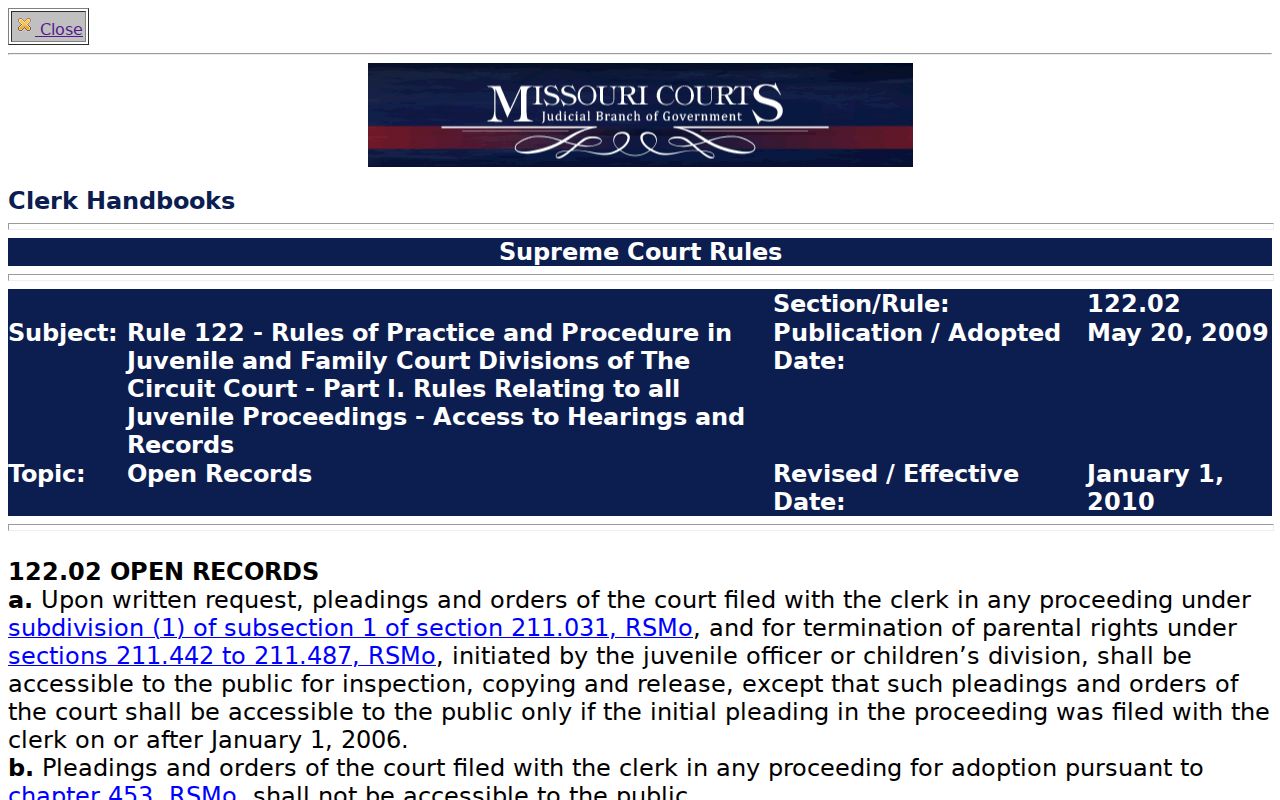
Because of those limits, a juvenile-related entry is not safe to assume open. Check the access rules first. The statutory closed-records text makes the point plainly: records the law requires to be closed stay off limits to the general public.
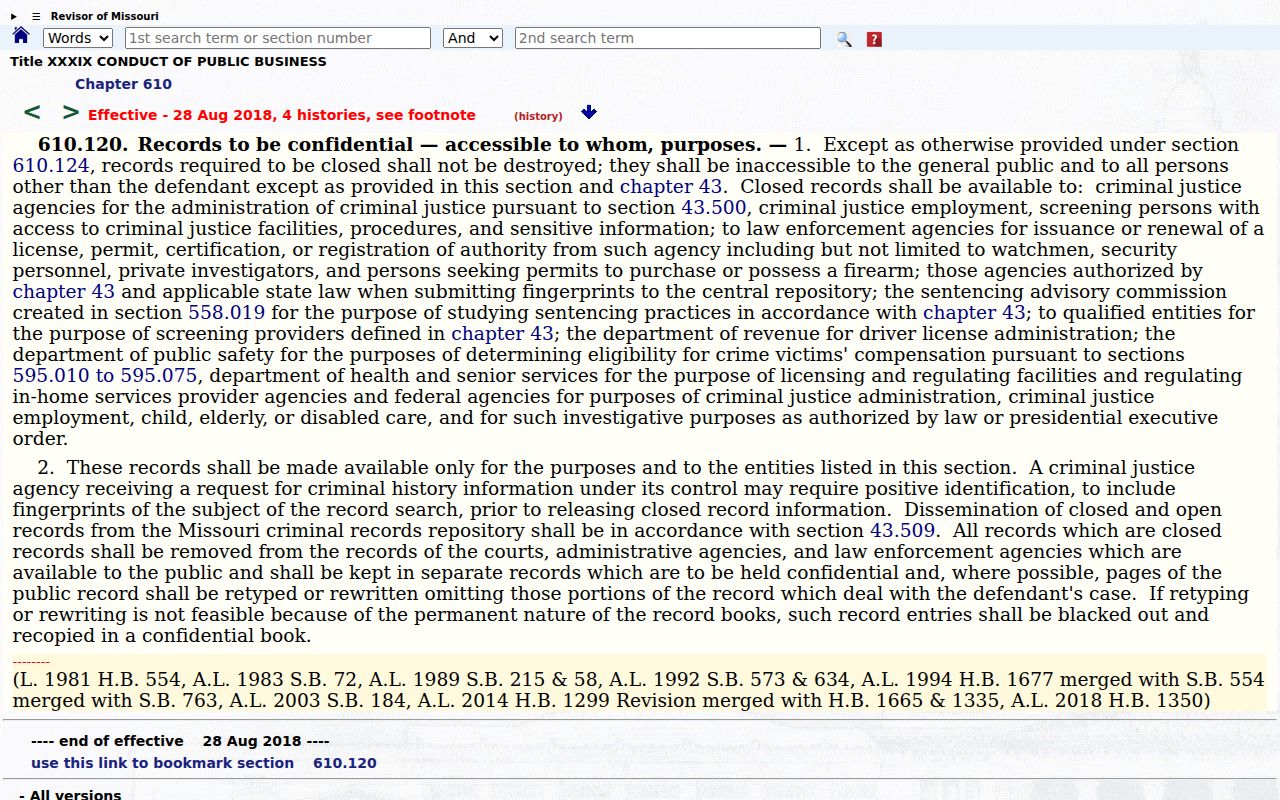
Even a case number does not unlock that confidentiality rule. The official victim-information statute covers another reason an otherwise public court file may show redactions.
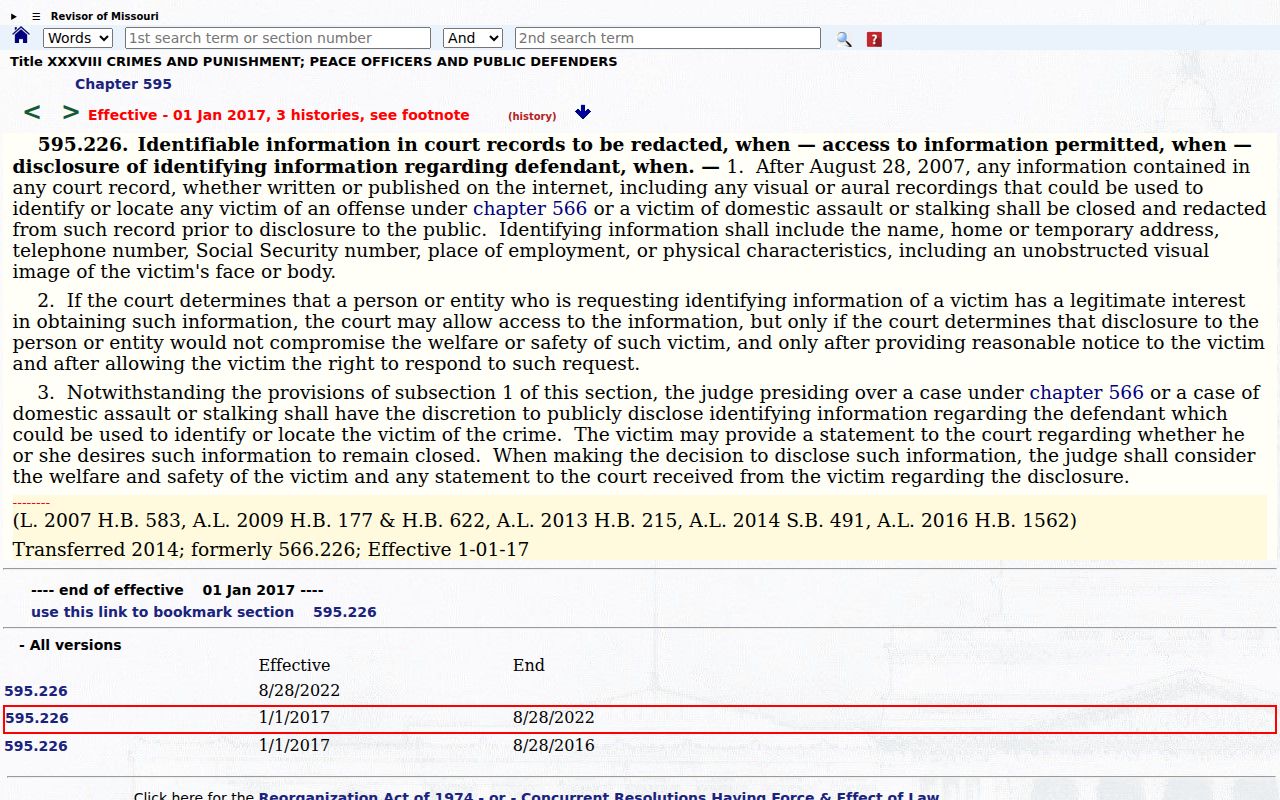
Use the available public docket description without reproducing protected identifying information.