
Texas County Court Record Requests
Begin the easy way. Search Missouri Case.net for the case basics. Pull the 25th Judicial Circuit case number, case style, and the docket entry that matters. With that in hand, contact the Texas County Circuit Clerk about the public file, copies, or certification. The office sits at 519 N. Grand Avenue, Suite 202, Houston, MO 65483. The published phone is (417) 967-3742.
Texas County posts no local copy-request form, electronic request address, or full copy-fee menu. So make the request itself specific. Name the court, case number, document title or docket date, date range, plain or certified choice, delivery preference, and contact information. State that you will pay the quoted amount. Always ask for current payment instructions before mailing money or originals.
- Find the case number, court, and document or docket date in Case.net if available.
- Call the Circuit Clerk or visit the second-floor Justice Center office for the correct division and current public-copy route.
- State whether the request is for inspection, a plain copy, a certified copy, an authenticated record, or a transcript.
- For an older or unposted item, ask about paper, microfilm, or archived records and provide the filing year and party role.
- For a public-record request, ask for the current submission method, estimate, and any written explanation of an access limit.
Texas County Court Record Layers
A "court record" really means three layers. The public case index is the searchable summary. It lists the number, style, dates, status, and party roles. The docket, or backer sheet, is the running chronological register. It logs filings, settings, orders, and other events. The case file sits underneath it all: the pleadings, exhibits, judgments, orders, returns, and everything else actually filed. Each layer can sit in a different state of public access.
Missouri Court Operating Rule 4.03 treats filed documents together with the docket or backer sheet as the official court record. Case.net may show only part of that record. A missing public image proves nothing. The item may be paper-only. It may carry no electronic attachment. It may also hold a security restriction that kept it from being published.
| Record layer | What it answers | Texas County route |
|---|---|---|
| Case index | What case is this? | Case.net, 25th Judicial Circuit. |
| Docket sheet | What events occurred and when? | Case.net Docket Entries or clerk request. |
| Case file | What document or order was filed? | Public File Viewer link or Circuit Clerk process. |
| Transcript | What was said at a hearing? | Reporter or authorized transcript route, not the docket. |
Kinds of Court Records
The Circuit Clerk's office runs civil, criminal, traffic, juvenile, probate, jury, and accounting divisions. So a Texas County public court record might mean case filings or docket sheets. It could also mean summonses, orders, judgments, charging documents, traffic records, probate material, or open financial records. Municipal court matters belong to the circuit system too. However, a city may set separate payment instructions.
Ask for the exact product you need. "The final judgment entered on a stated date" beats a request for everything. So does "the public docket sheet for a given number." A complete file can be bulky and may mix in confidential or non-electronic material. And an old online index is only a starting point. It is not proof the underlying paper record is gone.
Texas County Precise Copy Requests
Precision saves time. A tight request helps the clerk separate public material from confidential material in the court docket. List the 25th Judicial Circuit, Texas County, case number, and style if known. Add the division, exact document title or docket description, date range, desired format, and whether certification is necessary. If something cannot be released, simply ask what exists instead. Ask whether a public version, redacted copy, docket entry, or access procedure is available.
There are several ways in. Start online with Case.net. Visit the Circuit Clerk counter in person, call (417) 967-3742, or mail a focused written request to Suite 202. Missouri Court Operating Rule 4 requires public-access equipment. But Texas County does not publish the terminal count or location, so confirm before a trip. The county lists a fax and an email in some contexts. Yet it does not say every record request can travel that route. Check first.
Texas County Circuit Clerk
Texas County Justice Center
519 N. Grand Ave., Suite 202
Houston, MO 65483
(417) 967-3742
Weekdays, 8:00 a.m. to 4:30 p.m. Ask for the correct records division and a current fee or certification quote.
Court Records: What They Contain
When a public document is available, capture enough fields to identify it without copying protected information. The Case Header, case number, style, court, division, docket-entry date, document title, document type, and access state are the useful starting points. A case file may also show a page count, electronic-case marker, confidentiality notice, print or download behavior, and a public navigation path.
| Case number and style | Identifies the court file and public case caption. |
|---|---|
| Court and division | Shows the Texas County 25th Circuit route that keeps the record. |
| Docket date and event | Locates a particular public order, filing, or hearing record. |
| Document state | Shows whether a public link, restriction, or missing attachment is visible. |
| Certification status | Separates a browser view or ordinary copy from a clerk-authenticated copy. |
Do not reproduce full Social Security numbers, account numbers, driver-license details, addresses, victim information, or other protected material. The public record can be narrower than the private filing. When confidentiality applies, the clerk's route controls.
Copy Fees and Certification
No Texas County local fee table exists. It covers no docket sheets, certified copies, search time, or authentication. The Circuit Clerk has not published one. Missouri statutes set statewide rules and examples, but they are not a current county quote. So ask for the exact product, page count if known, certification need, and delivery method. Remember that a certified copy is a clerk-authenticated record. It is not the same as an online printout or a document link.
| Item | Published amount or rule |
|---|---|
| Paper public-record copy | Up to $0.10 per page for paper 9 by 14 inches or smaller under RSMo §610.026, plus allowable actual costs. |
| Certified copy | Texas County amount not located; ask the Circuit Clerk for the current quote. |
| Search or research time | Local amount not located; the statute permits actual research costs within its framework. |
| Transcript or authentication | Separate product and possible fee; confirm before requesting. |
RSMo §610.026 supplies the paper-copy ceiling and the public-record cost framework. The court-fee schedule may hold other line items, but it never replaces a direct Texas County clerk quote.
Texas County Certified Record Choices
Know what you are asking for before you order. A plain copy works fine for personal reference, such as checking one docket entry or keeping a copy of a public order. A certified copy is different: the clerk authenticates it as a true court record for official use. Exemplification is a further step. Say which form you need up front, since switching later can restart the process or change the fee.
A transcript is something else again. It records the words spoken at a hearing, prepared by a court reporter. Bring the hearing date, the judge or division, and the reporter's name if you have them. The docket can confirm a hearing happened. It never contains the transcript itself.
Access Rules for Court Records
Not everything in a court file is open. Confidentiality rules still apply to public records in Texas County. An ordinary civil or criminal docket may list the case number, style, events, settings, and dispositions. But the underlying documents can stay restricted. Juvenile, sealed, expunged, mental-health, and protected-victim material is often limited. So is anything with protected identifiers. And remember: a Case.net hit, a docket entry, and a full file are three different levels of access.
Missouri record rules: Court Operating Rule 4 governs the statewide record system; RSMo §610.023 supplies the Sunshine Law timing framework; and RSMo §610.120 controls records required to be closed.
What if the clerk says no? Ask for the legal basis in writing. Also ask whether a narrower public item or a redacted version exists. Knowing the case number does not entitle anyone to a confidential file, and the clerk cannot hand one over on that basis.
Texas County Older Court Records
Just because Case.net comes up empty does not mean the record is gone. Older Texas County files may live on paper or microfilm. They may be scanned images. Or they may sit in an index the online docket search does not reach. County history says records were moved to a cave on Arthurs Creek during the Civil War. They were brought back later. So physical survival and online availability are two separate questions.
When you contact the Circuit Clerk, give alternate spellings, the filing year, the case type, and the party's role. Ask that older indexes be checked too. Describe the scope you searched online. An empty results screen is not proof that no court record exists. A visit to the public terminal is often the next step. A request by mail works too.
Texas County Federal Record Routes
State cases and federal cases in Texas County live in separate systems. Texas County sits in the Southern Division of the Western District of Missouri. For a state case, go through Missouri Case.net or the Circuit Clerk. Federal resources only matter if the case belongs to federal court. The Western District’s county information shows how that federal jurisdiction is assigned.
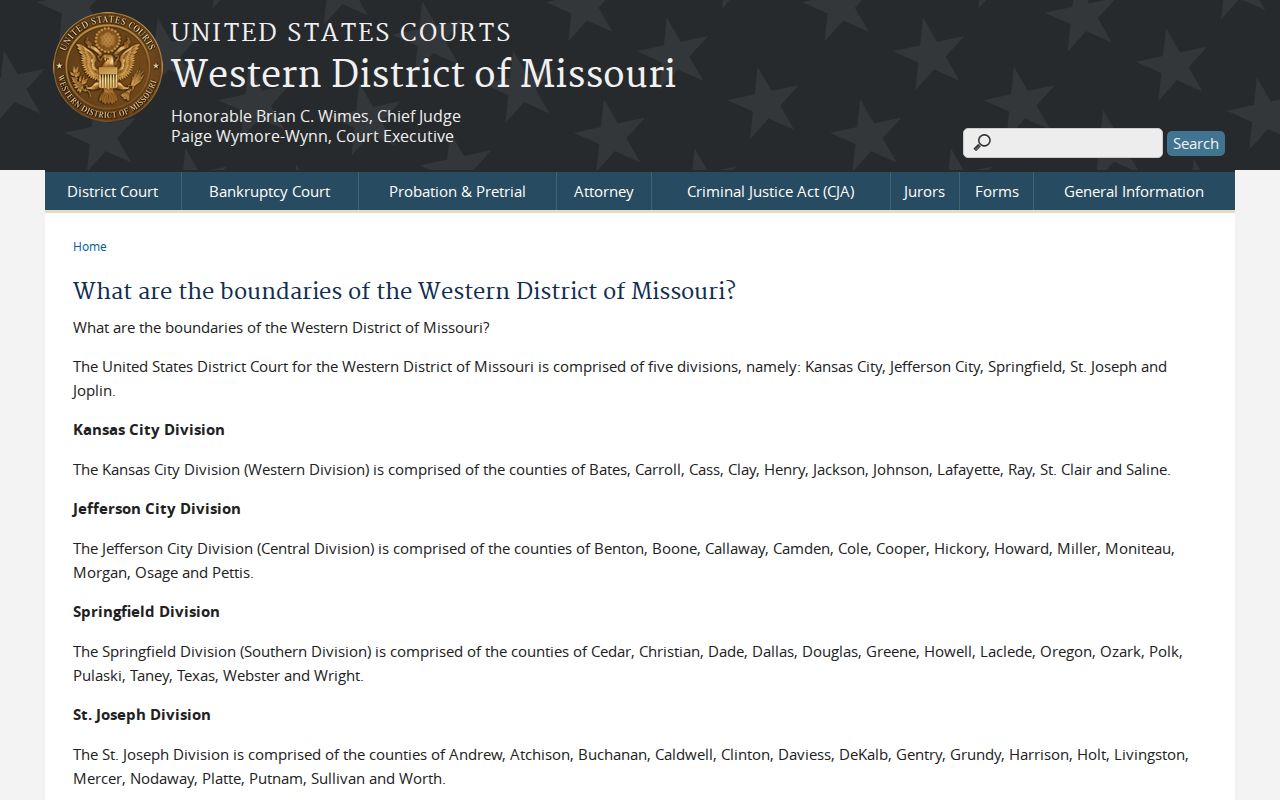
That split in jurisdiction explains why a Case.net search never returns a federal docket. The PACER public interface is the official place to run that docket search.
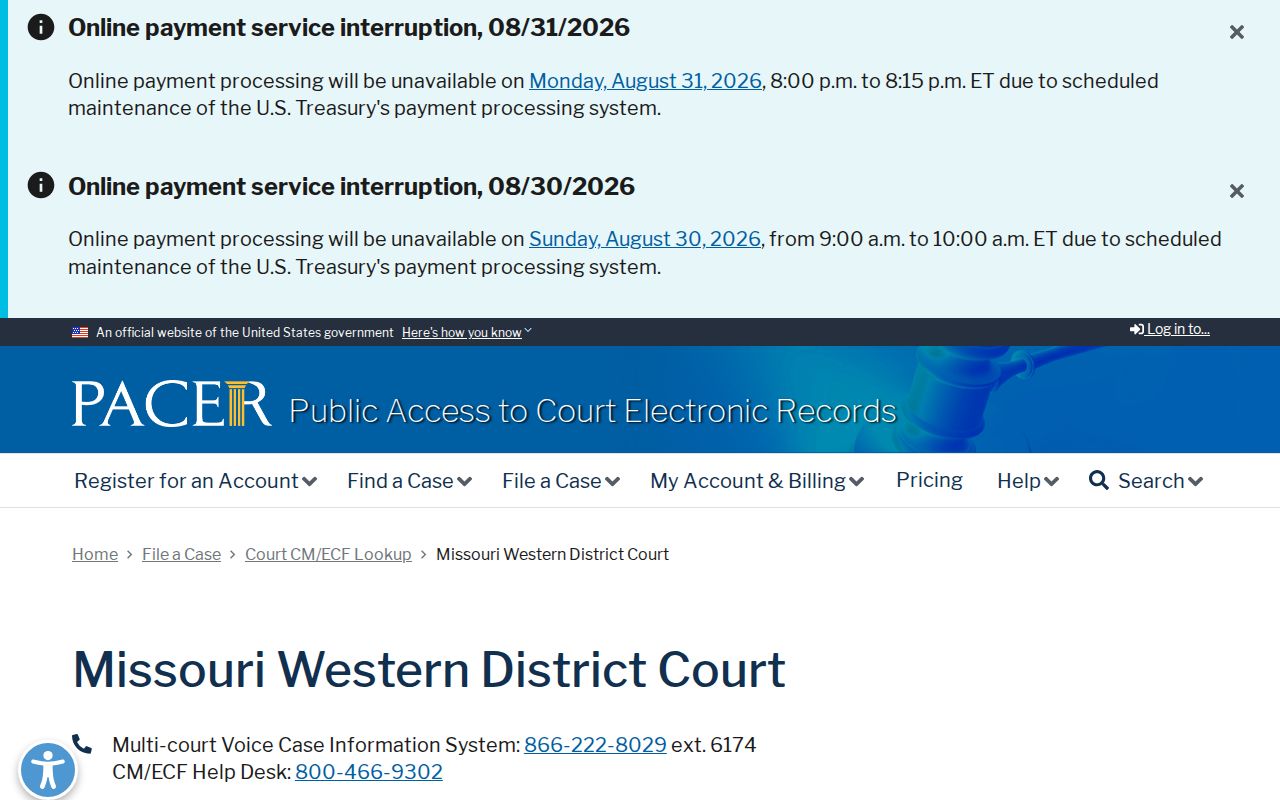
PACER has its own access rules and fees, separate from anything the Texas County Circuit Clerk charges for copies. The Western District PACER court lookup gives the federal court-contact path.
Take that federal route only after confirming the case is not a 25th Judicial Circuit file. The CourtListener RECAP interface is a free option for federal docket research.
None of it covers Texas County Circuit Court records. The PACER fee explanation lays out the official federal pricing.
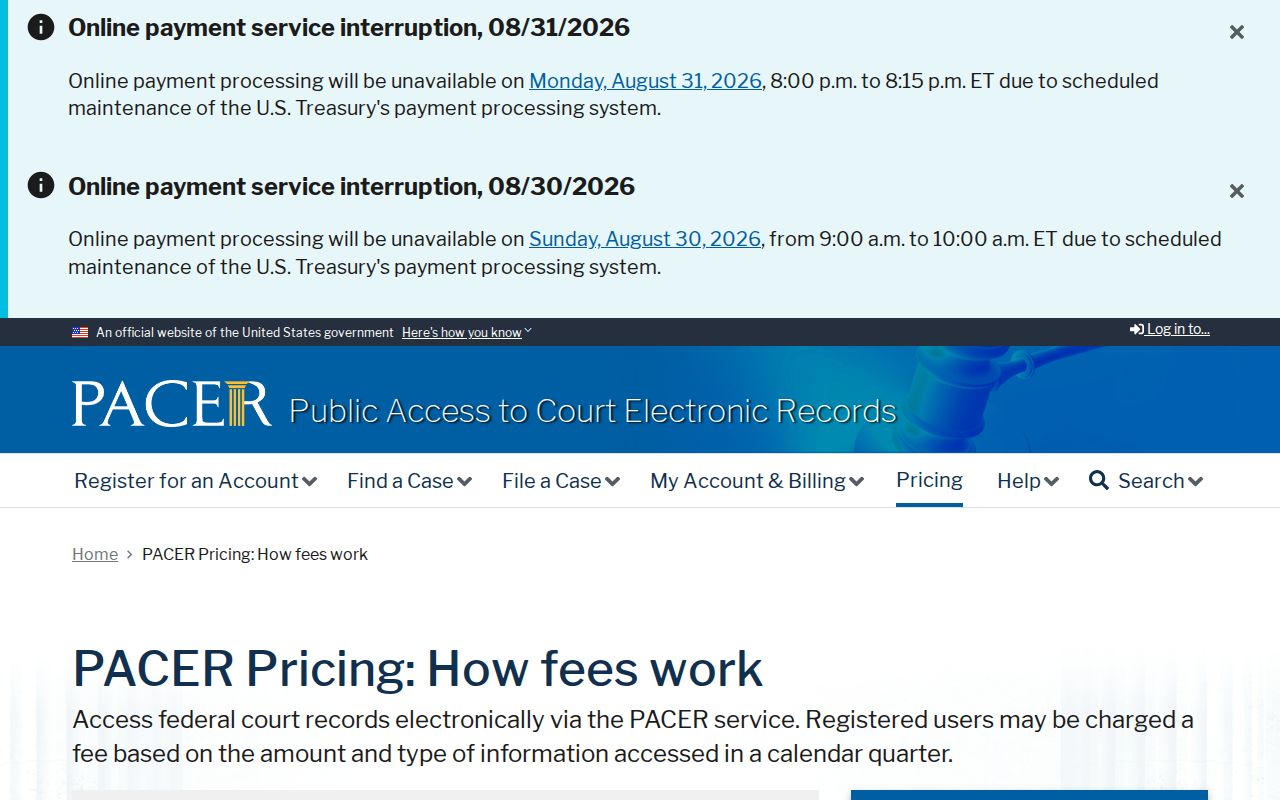
Those federal charges say nothing about what a Texas County state court copy costs.